

Sia Foday wades through an expansive rice plantation, dwarfed by the shoots that reach for the sky. She and her husband have toiled over this plot of land for as long as she can remember. They rely on the proceeds from this farm to feed their seven children.
But now, as she speaks about her life’s work, her brow creases with worry. Underneath the fertile lands of Peyefeh Section sits a deposit of gold that has caught the attention of three foreign mining companies. Two of the companies have pending mining licenses, according to the National Minerals Agency (NMA). The third, Deep Rock Minerals, has an active license. “This came as a surprise to us,” says Namati Sierra Leone Programs Deputy Director Daniel Sesay. “NMA has no right to award licenses without the express permission of the communities.”
Hundreds of farmers from 11 villages in Peyefeh Section, Kono District in eastern Sierra Leone say they fear such extensive mining activity will destroy their crops and pollute their water sources. They’ve made themselves clear: They reject the prospect of mining operations in their communities.
“If mining companies come here, they will destroy us,” Sia exclaims. “They will destroy our family.”
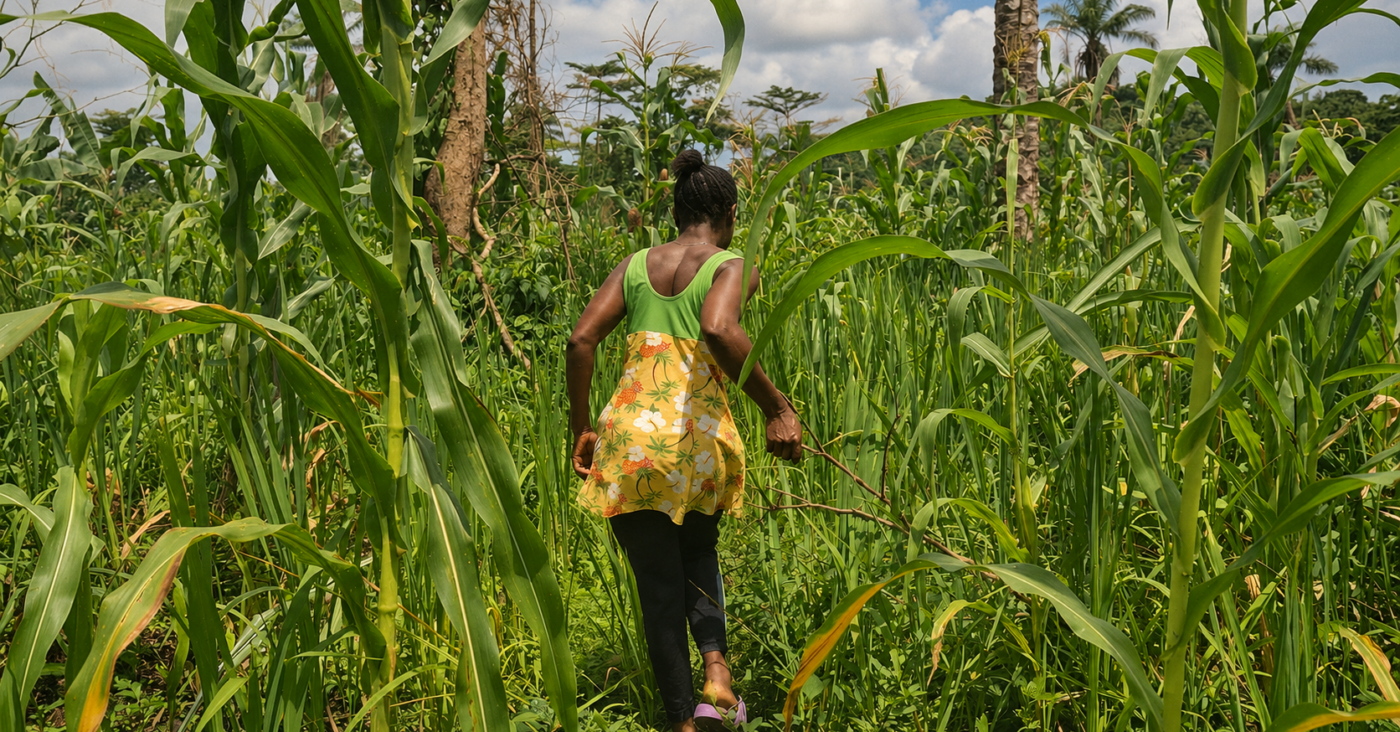
Sia Foday wades through her rice plantation. Credit: Namati Sierra Leone
Sia and hundreds of other farmers fear that what has happened elsewhere will happen on their land, too. In nearby Kaipeyah village, the remains of a once-thriving farming community offer a disturbing glimpse of what mining can leave behind. Mounds of reddish earth, some of which tower above regular-sized huts, rise above a landscape scarred by abandoned mining pits. Pools of dirty water fill the excavated ground, while a muddy, brown watercourse winds through the settlement. A handful of corrugated iron huts are among the few signs that people still live here.
“The farmers used to grow bananas, cocoyam, and cacao, but the authorities allowed mining to go on,” explains Lansana Kabbakoe, a landowner of Peyefeh Section and vocal critic of the proposed mining action. “Now everything is upside down.” With almost no trees left, the few residents that remain have no choice but to scratch a living by desperately searching for any gold nuggets the mining operation may have left behind.
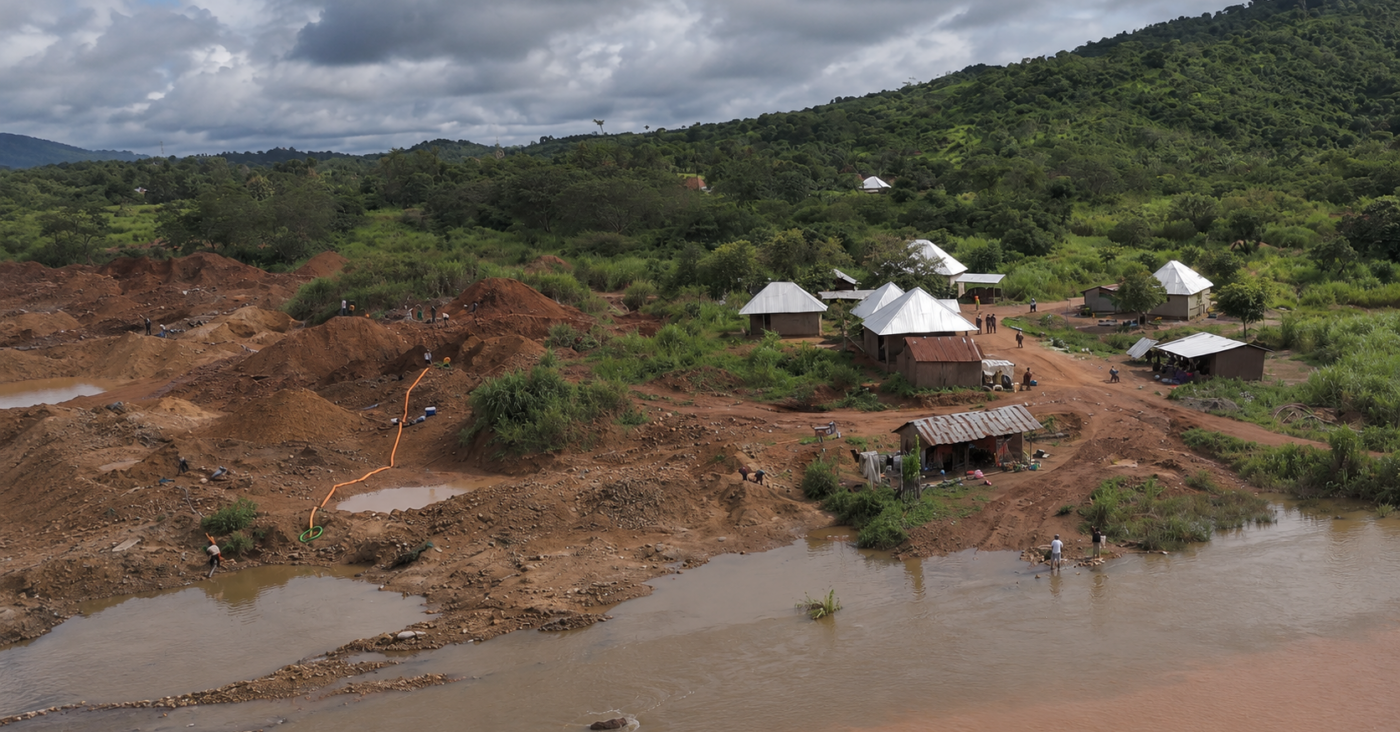
Peyefeh Section, Kono District, Sierra Leone. Credit: Namati Sierra Leone
Mining operations began in Kono in 1930. After nearly a century of resource extraction, people in the region have little to show for it except extreme poverty and environmental devastation. But if President Julius Maada Bio has his way, more mining is coming. In July, he encouraged a roomful of extractive industry leaders to seek partnerships ahead of the West Africa Integration and Investment Summit (WAIIS) 2026. He highlighted the growing global demand for critical minerals and Sierra Leone’s strategic advantage, citing its substantial deposits of iron ore, diamonds, rutile, bauxite, gold and other minerals.
Three days later, landowners in Peyefeh Section pursued a very different agenda. Together, they resolved to transfer legal representation authority to Namati Sierra Leone, which will work with them to protect their customary lands and community rights.
According to the 2022 Customary Land Rights Act, no investment may take place on land subject to customary law without the written Free, Prior and Informed Consent (FPIC) of at least 60% of the adult male and female members of the landowning family, or a fair representation of the community holding rights to the land. In addition, that act requires the written informed consent of at least 60% of adult family members before the family head enters into a customary land transaction.
These provisions are intended to ensure that decisions involving customary land aren’t made unilaterally by traditional authorities or individual family representatives. But the situation in Peyefeh raises questions about how those protections are being respected in practice.
During investigations, the Namati team discovered excavator tracks and blue markings on trees, which signified that covert survey and demarcation had occurred.
“Nobody sought my consent. I just woke up one morning and saw paint on my kola trees,” laments farmer Aiah Gbona.
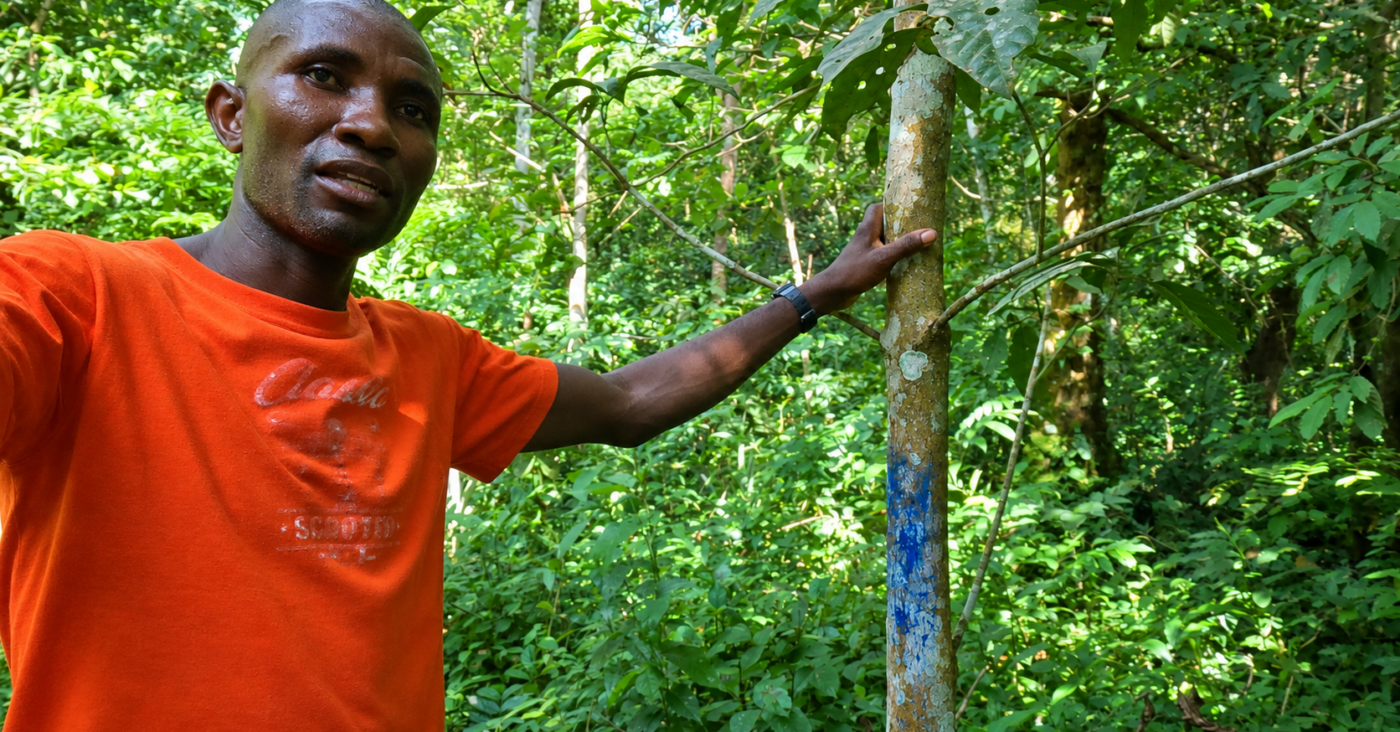
Aiah Gbona shows the blue marking on one of his trees. Credit: Namati Sierra Leone
Standing on his patch of land, farmer Francis Kamanda glances up into the branches of the closest cacao tree, heavy with ripening fruits. Countless more cacao trees stretch out around him. Every kilogram of cacao fruit — that’s about 25 fruits — goes for Le150 (about $6.55.)
“This plantation has allowed me to educate my children and build a house,” he says. “A mining operation will destroy everything.”
The other farmers who grow rice, oil palm, breadfruit, coffee, and fruits have similar stories and voice the same concerns.
“We have a strong farming culture,” says Patrick Vandy, a farmer and Islamic religious leader from Maia community. “Many of our children are in school and university. Our farming makes it possible.”
In early August, eleven communities in Peyefeh Section signed a letter to the Environment Protection Agency demanding that no license or approval be granted to any mining company until and unless the communities determine otherwise.
But there are pockets of support for mining operations within those communities. Some are open to investment if they think it will bring tangible benefits. At the local watering hole an older man addresses a group of young men who listen with rapt attention.
“We have rejected mining companies before because we did not feel that they were genuine,” he tells them. “But if another mining company comes to Peyefeh with an operation that will benefit you and I and they have transparent documentation, we will accept.”
Reports from the communities allege that meetings have been held by supporters of the mining companies to get more signatures in support of the proposed mining operations. Such efforts could prove consequential in determining whether companies can demonstrate sufficient community support. Even so, landowners who spoke with Namati say that no mining companies have approached them for discussion of any kind. Signatures alone do not necessarily establish that consent was freely given, informed by adequate disclosure, or obtained from the people legally entitled to grant it.
Tensions have intensified following reports of further activity on disputed land. Enraged landowners forwarded video clips to Namati that appear to show a foreign national being guided through Peya community land by a local landowner. An irate group of residents follows them, repeatedly declaring that they have not consented to any mining company surveying their land.
For these residents, the incident represents the apparent disregard for their wishes and the legal protections governing customary land. It is a sobering reminder that though a battle may have been won at the High Court, the war for justice continues.